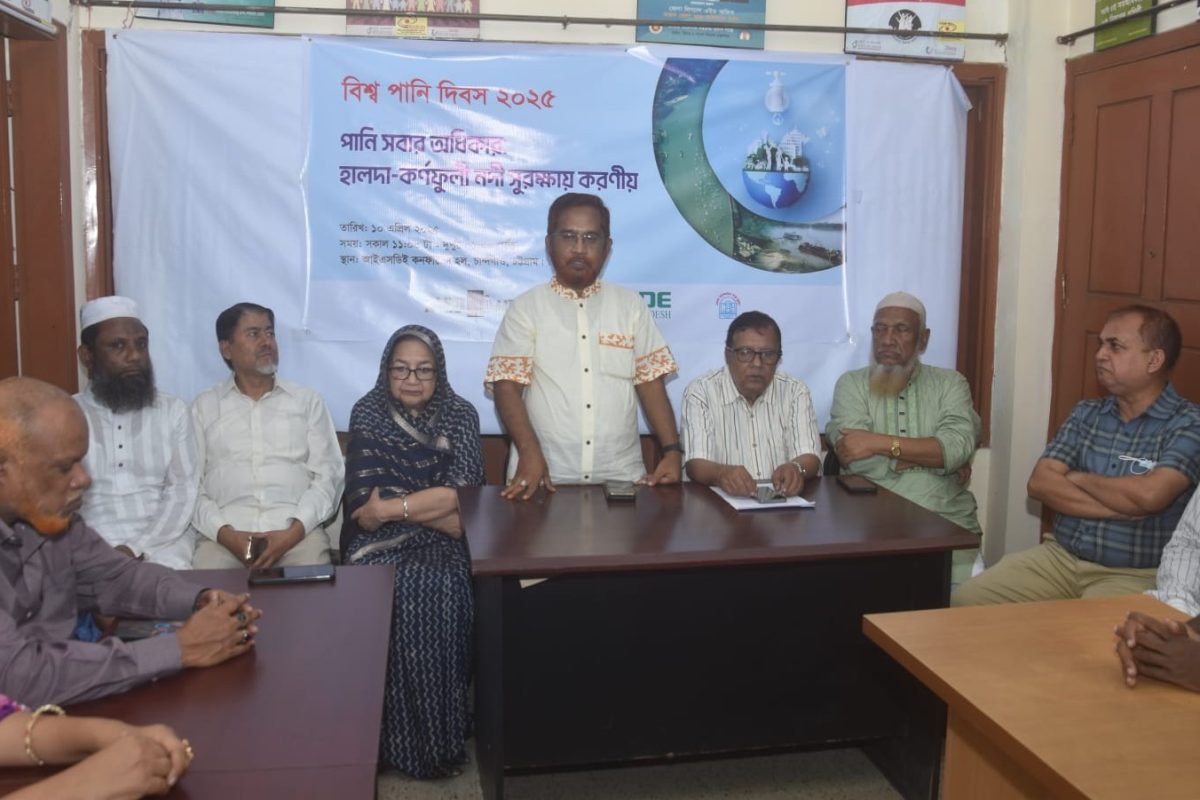
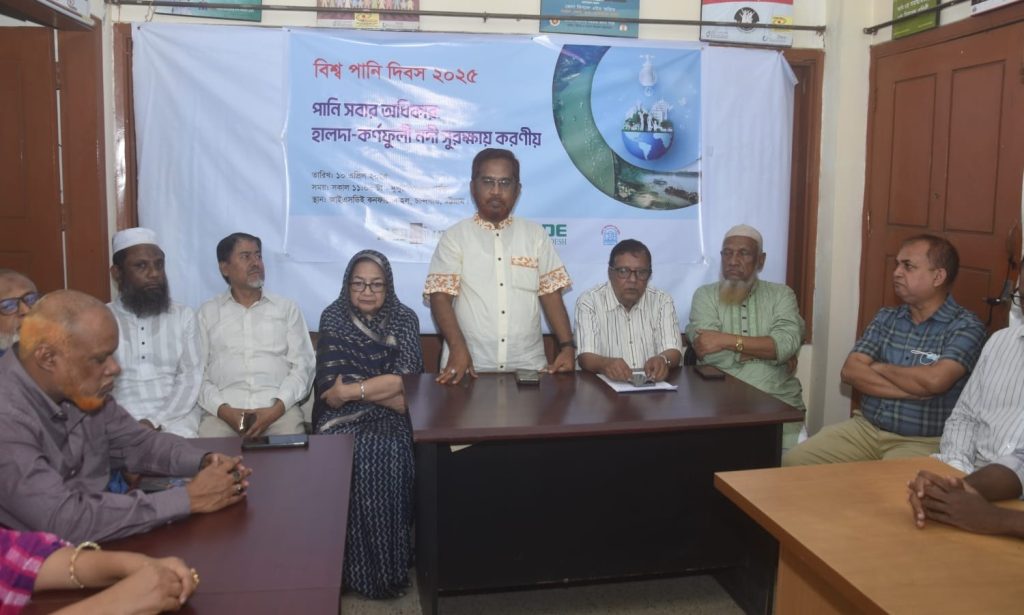
The port city of Chittagong, on the one hand, the entire city is submerged in water during the rainy season, and on the other hand, there is a cry for water during the dry season. As the water level in the coastal areas drops rapidly and the height of the seabed increases, salinity is constantly increasing. Therefore, agricultural work and housework are completely disrupted due to the shortage of pure drinking water. And the main reasons behind this are deforestation, encroachment on reservoirs, rivers and canals in the Chittagong Hill Tracts. If the situation of these two rivers, the main source of water supplied by WASA to Chittagong Metropolitan City, continues, WASA will not be able to supply fresh water in the future. Therefore, just as it is necessary to protect the forests of the Chittagong Hill Tracts, Karnaphuli and Halda rivers, it is also necessary to urgently bring advanced technology to remove salt from saline water in the process of purifying saline water. Various speakers made the above remarks at a discussion organized by the non-governmental development organization ISDE Bangladesh and CAB Chittagong in collaboration with the Association of Land Reform and Development (ALRD) to celebrate World Water Day on April 10.
The keynote address was delivered by Professor Dr. Khaled Mizbahuzzaman of the Institute of Forestry and Environmental Science, University of Chittagong, chaired by SM Nazer Hossain, Vice President of CAB Central Committee and Executive Director of ISDE Bangladesh. The concept paper was presented by ISDE Project Officer Raisul Islam.

The main article mentions that Chittagong city was founded about 500 years ago. But due to the lack of planned urbanization, it has not yet become a clean and pollution-free city. On the contrary, due to the lack of proper steps by the relevant government service agencies, the problems are increasing day by day. Chittagong’s famous Karnaphuli and Halda rivers are victims of pollution, encroachment, and filling. About 300 million liters of sewage is being discharged into the city every day. This will increase to 510 million liters per day by 2030. If the dumping of waste into the river is not stopped, these two rivers, the only source of drinking water in the city, will be subjected to terrible pollution. This will cause environmental pollution in Chittagong and a crisis in the city’s drinking water supply. However, these two rivers are the main source of drinking water for WASA. WASA is extracting 430 to 450 million liters of water from these two rivers every day. Another 100 to 120 million liters of water will be extracted in the future. In addition, the city generates about 2,000 metric tons of solid waste daily. A part of this waste also ends up in the river. In addition to the liquid and solid waste of the city, polluted chemicals from the industries on both sides of the river also end up in the Halda and Karnaphuli. Due to this, these two rivers are continuously being polluted. Illegal structures in Karnaphuli are not being evicted. On the contrary, the areas along the riverbank are being occupied.

The discussion was attended by prominent journalist and former president of Chittagong Journalists Union M Nasirul Haque, prominent women leader and former president of ADAB Chittagong Jasmine Sultana Paru, CAB Chittagong South District President Alhaj Abdul Mannan, former president of Boalkhali Upazila Bangladesh UP Chairman Association Nur Mohammad, central committee member of Bangladesh Frozen Fruits Exporters Association Mohammad Selim Jahangir, joint secretary of District Social Entrepreneur Council Mohammad Jane Alam, executive director of Subajer Jatra Saira Begum, president of Chittagong Drinking Water Manufacturing Association Faisal Abdullah Adnan, staff reporter of Dainik Purbadesh MA Hossain, president of CAB Chawkbazar Thana Committee Abdul Alim, coordinator of Odhikar Chittagong Osman Jahangir, president of CAB West Sholashar Ward ABM Humayun Kabir, project coordinator of CSDF Shampa K Nahar, president of Youth CAB Chittagong Metropolitan Abu Hanif Noman, Youth CAB member Sidartul Muntaha, Amjadul Haque Ayaz, Emdadul Islam, Abul Kasem, Mohammad Omar Farooq, Harisa Khanam Sukhi and others