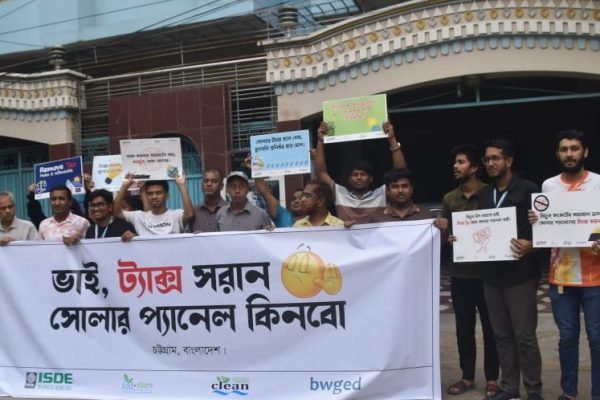
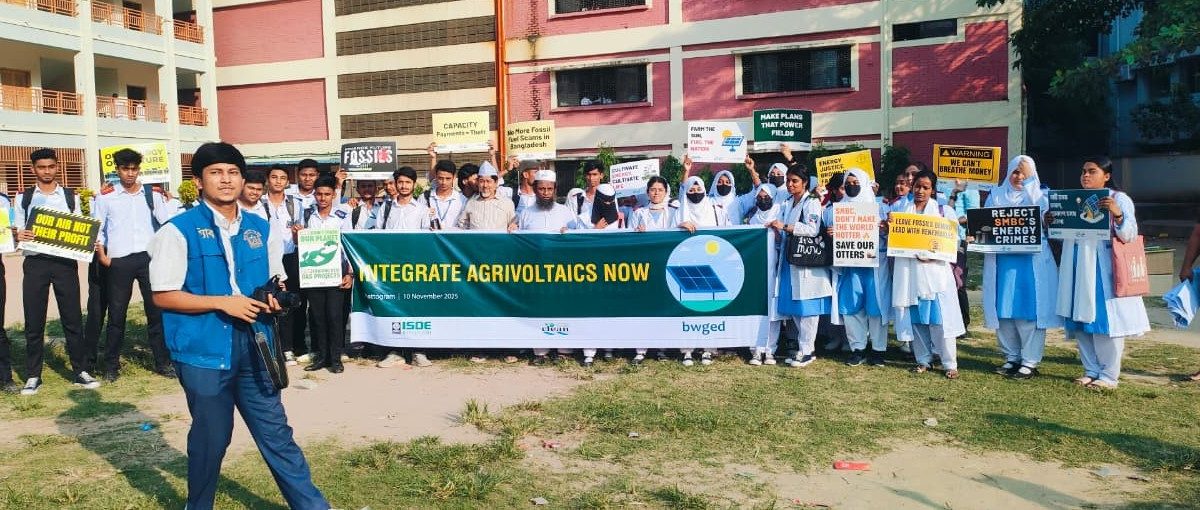

10 November 2025, Chattogram: ISDE Bangladesh(Integrated Social Development Effort), Coastal Livelihood and Environmental Action Network (CLEAN), and Bangladesh Working Group on Ecology and Development (BWGED) organized a strong campaign in Chandgaon, Chattogram, advocating for the inclusion of agri-voltaics (agriculture combined with solar energy) in Bangladesh’s renewable energy policy. The main objective of the campaign was to promote the use of agri-voltaics and include it in the Integrated Energy and Power Master Plan (IEPMP).

Agri-voltaics allows simultaneous agricultural cultivation and solar energy production on the same land. This enables farmers to continue crop production while selling solar electricity for additional income. The system enhances farmers’ financial stability, maintains land productivity, and supports environmental balance. Experts emphasize that integrating agri-voltaics into Bangladesh’s IEPMP is timely. This integration will increase the share of renewable energy and enable rural farmers to become active participants in electricity production. Additionally, if a net metering system is included in agri-voltaics, farmers can supply excess electricity to the national grid, reducing electricity bills and earning extra income.

CAB Central Vice President and Executive Director of ISDE S M Nazer Hossain said, “Agri-voltaics is not just a technology; it is a promise of sustainable agriculture and environmentally friendly energy.” Under agri-voltaic systems, the shade provided by solar panels retains slightly higher soil moisture, benefiting many crops. It reduces soil heating, preserves water, and protects crops from heat stress. Thus, both agricultural productivity and the environment benefit. Agri-voltaics is eco-friendly and sustainable, retaining soil moisture, protecting crops from excessive heat and sunlight, and reducing carbon emissions. The integration of agriculture and electricity in Bangladesh paves the way for green, sustainable, and profitable farming, ensuring farmers’ financial security while enhancing the country’s renewable energy potential.